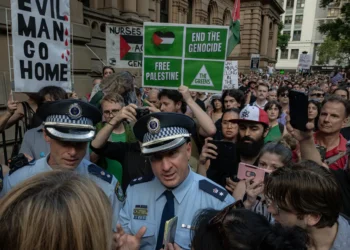
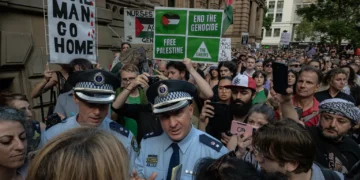





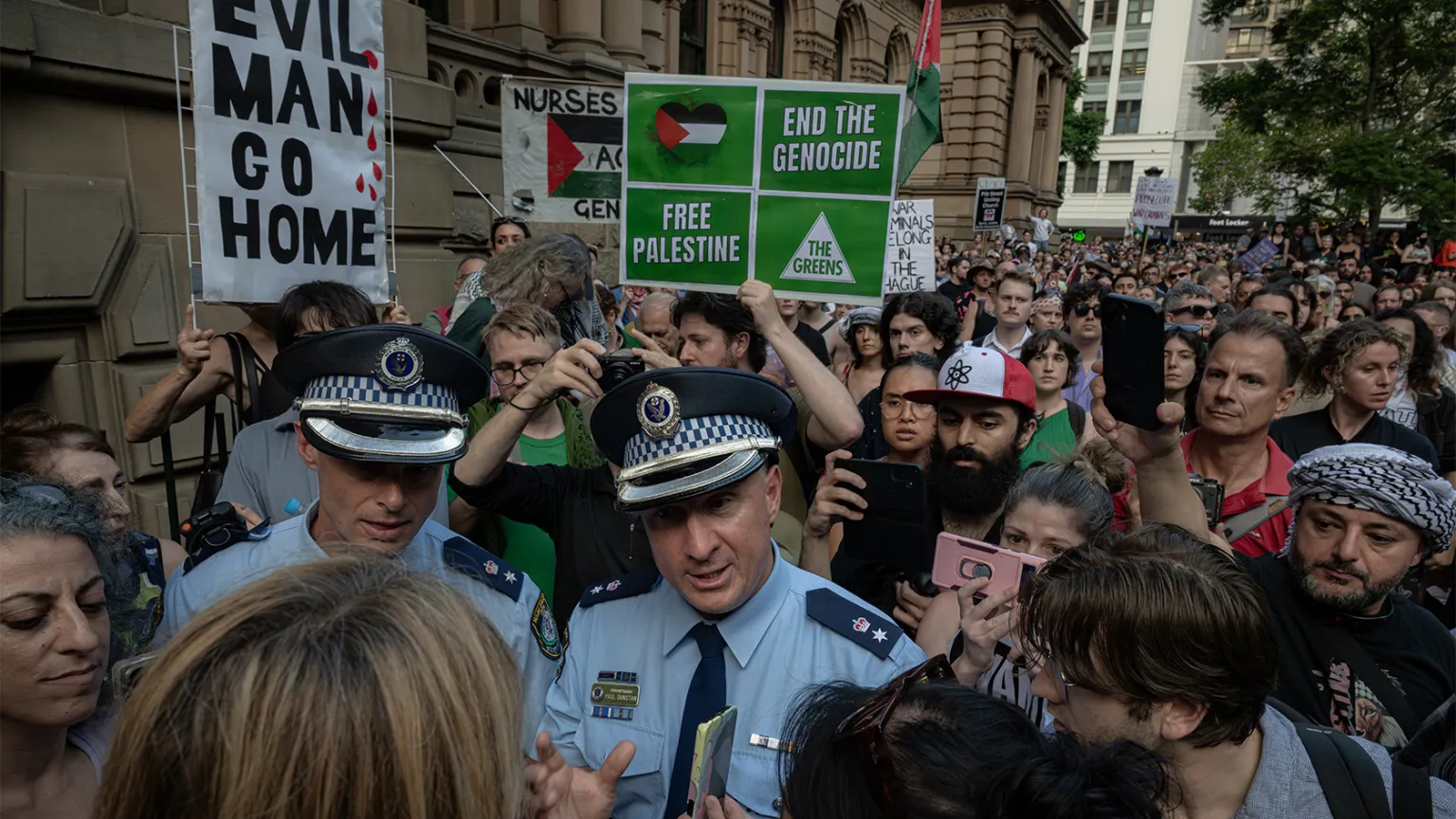
Sydney — Concurrent with the announcement and execution of the official visit of Isaac Herzog, President of Israel, to Australia, groups of citizens and civil society activists held protest gatherings in central areas of Sydney, expressing their opposition to the policies of the Israeli government and their humanitarian consequences. These demonstrations, which organisers described as largely peaceful, were accompanied by a significant police presence, a factor that became the main focus of criticism by protesters and legal observers.
Under the laws of the state of New South Wales, the holding of public assemblies requires notification to, or authorisation from, the police, a mechanism that exists alongside the legal recognition of freedom of expression and the right to peaceful assembly within Australia’s legal framework. Organisers of the protests stated that parts of the event had been coordinated in advance; however, police authorities indicated that changes in march routes or an unexpected increase in crowd size could place the gathering outside the scope of the original authorisation and necessitate police intervention.
The visible and extensive presence of the New South Wales Police Force was justified on the basis of security risk assessments and the need to protect official delegations. Nevertheless, images circulated on social media and eyewitness accounts suggest that, at certain moments, crowd-control tactics—including temporary containment and restrictions on movement—were perceived as exceeding what was strictly necessary and, in some cases, contributed to heightened tensions. Critics argue that the principle of proportionality in the exercise of police powers was not applied consistently and that pre-emptive measures against peaceful demonstrators may have a chilling effect on the exercise of the right to protest.
Police have rejected these criticisms, stating that all actions were conducted in accordance with operational guidelines and aimed at ensuring public safety, and that no disproportionate use of force occurred. According to police statements, the primary objective was to prevent potential clashes and maintain order in a densely populated urban environment.
Reports indicate that a limited number of arrests were made during the protests, with police attributing these arrests to failures to comply with lawful directions. In contrast, human rights lawyers emphasise that transparency regarding the legal basis for arrests, prompt access to legal counsel for detainees, and the availability of judicial review are fundamental benchmarks for assessing adherence to the rule of law.
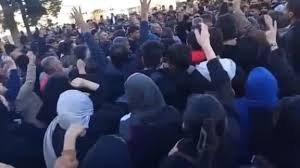
In addition, on the margins of the demonstrations, reports emerged regarding police interaction with a group of worshippers who had begun to perform prayers near the protest area. According to witnesses, police officers, citing security considerations and the alleged obstruction of public thoroughfares, prevented the continuation of the prayer gathering and instructed the worshippers to disperse, prompting objections from some participants. Critics described this conduct as an infringement of freedom of religion and peaceful assembly, stressing that the performance of prayers that does not pose a security risk or cause disruption should not be subject to police intervention. In response, police stated that the action was taken solely to manage space and prevent congestion and was not intended to restrict religious practice. Nevertheless, the incident has been cited as one of the more contentious aspects in the broader assessment of police conduct towards both demonstrators and non-protesting attendees.
In response to these developments, several civil liberties organisations have called for an independent review of how the demonstrations were managed, emphasising that police must strike a more careful balance between protecting official guests and safeguarding the fundamental freedoms of citizens. They have also stressed the importance of preventive dialogue with organisers, de-escalation training, and the minimal use of crowd-control measures as effective means of reducing tension.
Overall, the Sydney protests once again highlighted the longstanding tension between security considerations and the protection of citizens’ fundamental rights. While government authorities and police continue to emphasise the necessity of maintaining security, critics argue that the primary measure of the legitimacy of law-enforcement actions lies in adherence to proportionality, transparency, and accountability—factors that any independent review could play a decisive role in reinforcing public trust and shaping the framework for managing future public assemblies.