







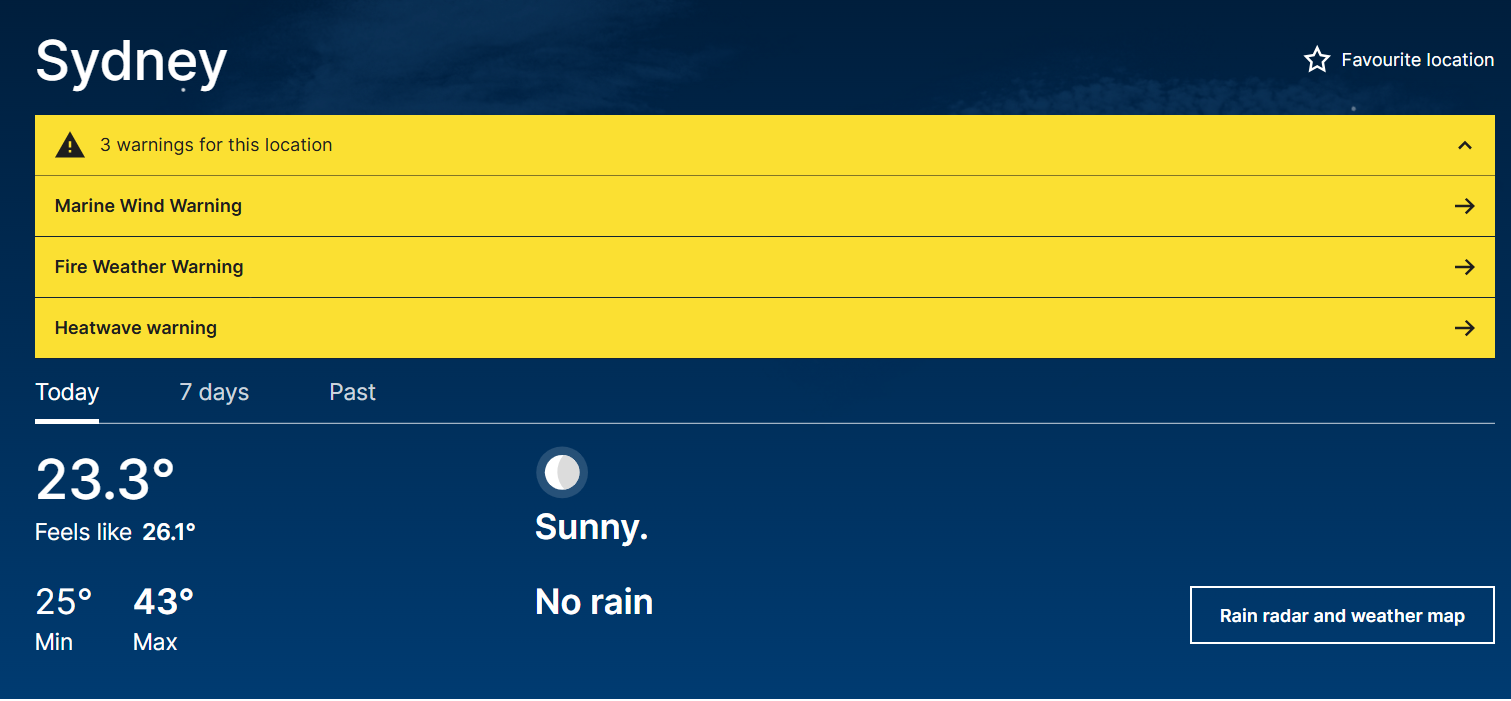
Australia has recently been hit by one of the most severe heatwaves in years—a phenomenon that has affected large parts of the country, particularly the states of New South Wales, Victoria, South Australia, and parts of Western Australia, with serious consequences for public health, the environment, infrastructure, and emergency services.
According to the Australian Bureau of Meteorology, temperatures in many regions have exceeded 40 degrees Celsius, with some inland areas reaching levels well above historical January averages. Meteorological experts emphasize that this heatwave is the result of a persistent high-pressure system combined with the influx of extremely hot and dry air masses from central Australia—conditions that have caused the extreme heat to persist for several consecutive days, with little to no overnight cooling.
Health Impacts and Public Warnings
State health authorities have warned of a rise in cases of heat exhaustion, dehydration, and the worsening of cardiovascular and respiratory conditions. Officials say that while older people, children, and those with chronic illnesses are the most vulnerable, extreme heat can be dangerous for all age groups—particularly during outdoor physical activity or prolonged exposure to direct sunlight.
In this context, citizens have been advised to avoid non-essential travel during peak heat hours, increase water intake, remain in cool environments, and check on neighbors—especially those who live alone or are elderly. Emergency services have also been placed on high alert to respond to an expected increase in heat-related calls.
Bushfire Risk and Pressure on Infrastructure
Alongside rising temperatures, the risk of bushfires in many areas has reached “high” to “catastrophic” levels. The combination of extreme heat, low humidity, and hot winds has created conditions in which even a small spark could trigger a large-scale fire. In some regions, legal restrictions have been imposed on lighting fires, using certain equipment, and accessing forested areas, while firefighting forces remain on full standby.
At the same time, the heatwave has placed additional strain on the power grid. Increased use of cooling appliances has prompted energy operators to warn of possible localized outages. Authorities have urged residents to manage electricity consumption during peak demand hours, where possible, to help maintain grid stability.
Legal Dimensions and Public Responsibilities
From a legal perspective, employers are required to ensure the safety of workers during periods of extreme heat. This responsibility includes adjusting working hours, providing adequate water and rest breaks, and preventing high-risk outdoor activities. Regulatory bodies have warned that failure to comply with safety requirements under extreme heat conditions may result in legal consequences for employers.
Drivers and pet owners have also been reminded that leaving children or animals in vehicles—even for a short time—can have fatal consequences and is considered a criminal offense under state laws.
Long-Term Context and Expert Perspectives
Climate experts believe that the increasing frequency and intensity of heatwaves are part of a long-term trend linked to the warming of Australia’s climate—a trend that in recent decades has been accompanied by new temperature records and a growing number of extremely hot days. According to specialists, adapting infrastructure, urban planning, and public health policies to these conditions has become more critical than ever.
Overall, the current heatwave has once again highlighted the importance of preparedness, accurate public communication, and cooperation between government authorities and citizens, as effective management of such conditions can help prevent loss of life, economic damage, and environmental harm.