

3 October 2026 | Australia Today
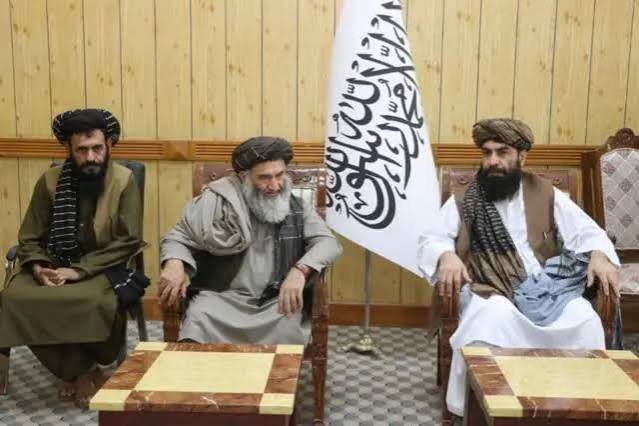
The Taliban have rejected a claim by Pakistan’s military that senior members of several armed groups met in Kandahar province, amid mounting security tensions between Afghanistan and Pakistan following recent Pakistani air strikes inside Afghanistan. The office of Mohammad Shirin Akhund, the Taliban governor of Kandahar, dismissed the allegation on Friday as unfounded “propaganda”. A day earlier, Pakistan’s military had alleged that representatives of several armed groups gathered in Kandahar in August to discuss stepping up attacks in Pakistan. Pakistan has so far provided no public evidence that can be independently scrutinised to substantiate the claim.
What has Pakistan alleged?
Pakistani military spokesman Ahmed Sharif alleged at a televised news conference on Thursday that members of several armed groups met in Kandahar on 26 August. He said representatives of the Balochistan Liberation Army (BLA), al-Qaeda in the Indian Subcontinent (AQIS) and the Hafiz Gul Bahadur group attended. The BLA is a Baloch separatist group fighting for Balochistan’s independence. AQIS is al-Qaeda’s regional branch in South Asia, while the Hafiz Gul Bahadur group is an Islamist armed network in Pakistan with historical roots in North Waziristan.
The military spokesman alleged that the meeting aimed to coordinate an escalation of violence in Pakistan. However, the Associated Press reported that he did not explain how Pakistani officials had learned of the purported meeting or publicly present evidence to support the allegation.
The Taliban’s response
The office of the Taliban governor of Kandahar rejected the allegation, accusing Pakistan of using such claims to justify military operations inside Afghanistan and civilian deaths. The response reflects a wider dispute between the Taliban and Islamabad. Pakistan has long accused the Afghan Taliban of sheltering armed groups operating in Pakistan, particularly Tehrik-e-Taliban Pakistan (TTP). Afghanistan’s ruling authorities deny the allegation.
The TTP is a separate organisation from the Afghan Taliban, although the two share historical and ideological ties. Pakistan has faced a rise in armed attacks in recent years, particularly those attributed to the TTP and Baloch separatist groups.
Pakistani air strikes and civilian deaths
The latest dispute goes beyond a war of words. Pakistan’s military made the allegations hours after Pakistani air strikes in Afghanistan’s Kunar and Helmand provinces that also caused civilian casualties.
The United Nations Assistance Mission in Afghanistan (UNAMA) said on 1 October that at least 10 civilians were killed and nine others injured in air strikes in Kunar and Helmand. Its assessment found that most of those killed were children. UNAMA also said it had recorded more than 1,100 civilian casualties in Afghanistan from cross-border armed violence since the start of 2026.
Pakistan says its air strikes targeted armed groups’ positions. However, the two sides’ accounts of the targets and outcomes of military operations cannot always be independently verified. The civilian casualty figures in this report are based on information verified by UNAMA.
International concern over civilian protection
The latest air strikes have also drawn international concern. Richard Bennett, the UN Special Rapporteur on human rights in Afghanistan, expressed concern over civilian deaths, particularly those of children, and called for accountability. The European Union also deplored civilian casualties in Kunar and Helmand, urging both sides to exercise restraint and resolve their differences through dialogue. UNAMA called for de-escalation, dialogue, compliance with international law and measures to prevent further harm to civilians. In its official statement, the mission stressed that civilians continue to bear the consequences of cross-border fighting.
Rising tensions between the Taliban and Pakistan
Relations between the Taliban and Pakistan’s government have deteriorated sharply in recent months. Border clashes and air strikes, alongside mutual accusations of support for armed groups, have fuelled tensions. Pakistan has repeatedly alleged that armed groups opposed to Islamabad use Afghan territory to organise attacks. Taliban officials, in turn, have accused Pakistan of supporting or facilitating the activities of some armed groups against Afghanistan. Both sides deny the other’s allegations.
The dispute over armed groups’ activities has become a major source of instability in relations between the Taliban and Islamabad. Continuing cross-border attacks and civilian casualties have also raised fears of a wider conflict between the two countries. Pakistan’s specific allegation of a meeting in Kandahar on 26 August remains disputed: Pakistan says the meeting took place, Afghanistan’s ruling authorities deny it, and sufficient public evidence to independently verify the claim has yet to be provided.
Sources: Associated Press (AP), the United Nations Assistance Mission in Afghanistan (UNAMA), and official statements by Afghan and Pakistani authorities.