
Islamabad – 30 September 2026
Mohammad Sadiq, Pakistan’s special representative for Afghanistan, said at a meeting in Islamabad on Wednesday that the United Nations, the Organisation of Islamic Cooperation (OIC) and the Shanghai Cooperation Organisation (SCO) should play a more coordinated role in addressing Afghanistan’s security challenges. His remarks come as relations between Afghanistan and Pakistan have grown more strained in recent months amid increasing militant attacks in Pakistan, border clashes and cross-border strikes.
Pakistan: Afghanistan faces two major challenges
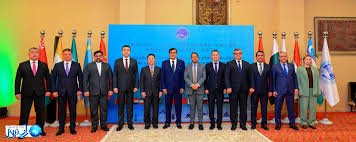
Speaking at a meeting titled “The Afghanistan Conundrum: A Conference on Afghanistan’s Situation and the Path to Peace”, Pakistan’s special representative said Islamabad sees two fundamental problems in Afghanistan’s current situation: the lack of an inclusive governing structure and the presence of armed groups on Afghan territory. According to Mohammad Sadiq, the combination of non-inclusive government and armed group activity could create gaps whose security consequences would extend beyond Afghanistan. He said Pakistan has experienced growing cross-border security threats and Central Asian countries also have concerns about stability along their borders. Sadiq argued that Afghanistan’s situation should therefore not be treated solely as a bilateral issue between Pakistan and Afghanistan; the UN, OIC and SCO should also help find a solution.
Kabul and Islamabad’s dispute over Tehrik-e-Taliban Pakistan
One of the main points of contention between the two countries is the activity of Tehrik-e-Taliban Pakistan (TTP) . Islamabad claims members of the group use Afghan territory to plan and carry out attacks inside Pakistan and that the authorities in Kabul have not done enough to stop them. Afghanistan’s Taliban authorities reject the accusation and maintain that Pakistan’s security problems are its own internal matter. The dispute has intensified in recent months alongside rising attacks in Pakistan’s border regions, particularly Khyber Pakhtunkhwa. In his remarks, Mohammad Sadiq accused Kabul’s authorities of refusing to acknowledge the extent of armed groups’ presence in Afghanistan. He believes denying the issue prevents an effective response to security threats.
UN reports on the presence of armed groups
The presence of armed groups in Afghanistan has been raised beyond statements by Pakistani officials. According to Arab News, UN monitoring reports have also documented the presence of several armed groups in Afghanistan. One UN report this calendar year stated that no member state had confirmed the Taliban authorities’ claim that there were no armed groups in Afghanistan. The report described Tehrik-e-Taliban Pakistan as one of the largest groups operating there. Taliban authorities have nevertheless repeatedly denied supporting or enabling groups that act against Pakistan.
Rising tensions and cross-border attacks
Pakistan’s special representative made his remarks after the country experienced several deadly attacks and clashes between security forces and militants during September. A significant number occurred in Khyber Pakhtunkhwa, along the Afghan border, killing civilians and Pakistani security personnel. Pakistan also carried out strikes inside Afghanistan in September, saying the operations targeted militant positions and hideouts. These developments have heightened tensions between the neighbours, with mutual accusations over responsibility for border insecurity continuing.
Warning of regional consequences
Pakistan’s special representative also warned that expanding armed group activity could become uncontrollable, creating wider security consequences for Pakistan, Afghanistan and Central Asian countries. He urged Afghan authorities to acknowledge the problem and cooperate on finding a verifiable solution. Taliban authorities, however, have so far rejected Pakistan’s argument that Afghanistan bears responsibility for the rise in attacks inside Pakistan. The dispute over Tehrik-e-Taliban Pakistan has become a major source of tension between Kabul and Islamabad, taking on broader regional dimensions as cross-border strikes and fighting increase.
Source: This report is based on information published in Arab News Pakistan by Kashif Imran on 30 September 2026 .