

The Australian Government has announced a broad package of reforms to the country’s migration system, covering student and graduate visas, visitor visas, Working Holiday visas, skilled migration, protection claims, migration agents, and enforcement against people who remain in Australia after their visas expire.
The overall direction of the policy is clear: the government wants to reduce net overseas migration, prevent the repeated use of temporary visas to prolong stays in Australia, and at the same time direct migration more closely towards the skills the Australian economy needs, particularly in housing and construction.
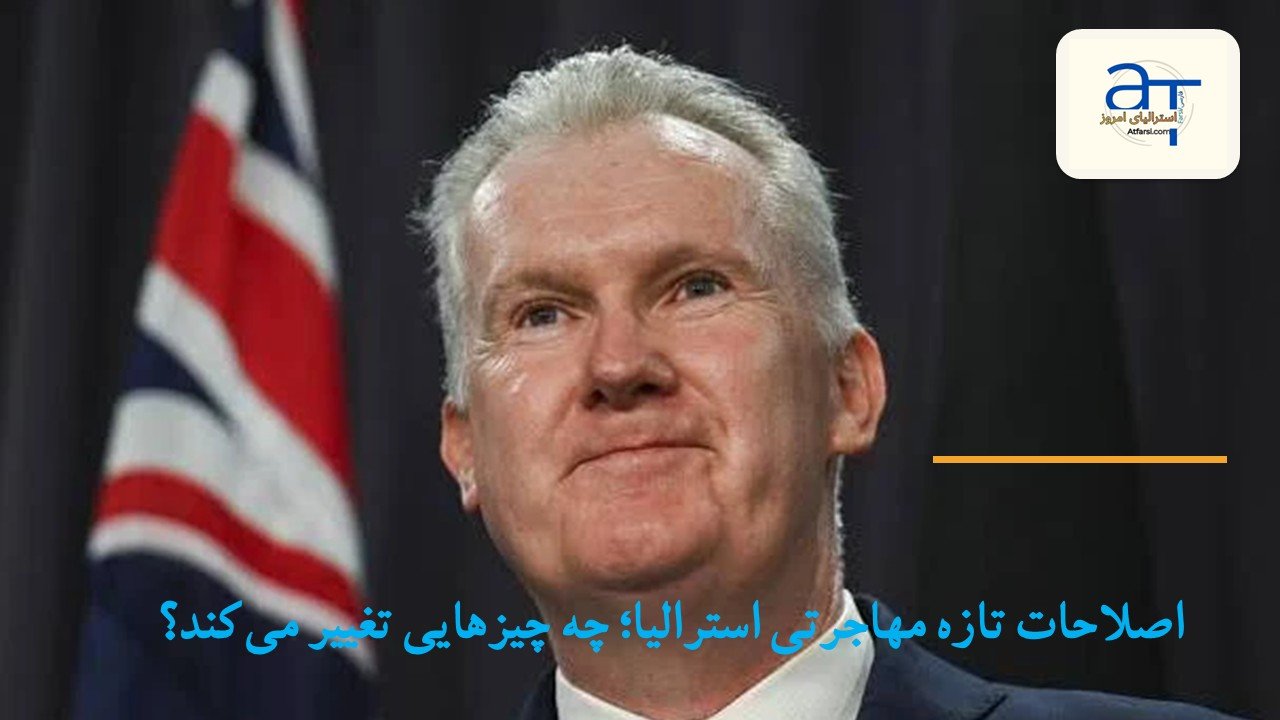
Tony Burke, Australia’s Minister for Home Affairs, summarised the government’s new policy framework in a speech at the National Press Club in Canberra around three questions: Who arrives in Australia? Who stays? And who should leave? These three questions represent a new phase in the reform of Australia’s migration system. Part of this process began in 2023, when the government put reform of the skilled migration points system, greater scrutiny of student visas, measures to prevent repeated movement between visas, and efforts to reduce prolonged stays on temporary visas on its policy agenda.
Why is the government changing migration policy again?
At the beginning of his speech, Burke stressed that the government continues to regard migration as one of Australia’s economic and social strengths. However, the government believes the migration system should be managed in a way that gives it greater control over migrant numbers, visa categories, the skills migrants bring, and the pathways through which they remain in the country. This distinction is important to understanding the new reforms. The policy does not mean an end to migration; rather, it represents a shift away from a largely demand-driven system towards one in which the government plays a greater role in determining the number and type of migrants entering Australia. Burke said significant parts of Australia’s migration system had operated on a demand-driven basis for several decades. In practice, this meant that when employers wanted more workers, or universities and education providers had the capacity to recruit international students, the migration system largely responded to that demand. The government now believes migration levels need to be better aligned with housing capacity, infrastructure and the genuine needs of the labour market. Burke also said the sharp rise in migration following the COVID-19 pandemic was not a permanent trend and that net overseas migration is now around 47 per cent below its post-pandemic peak.
Housing: Is migration responsible for the crisis?
One of the most significant parts of the Home Affairs Minister’s speech focused on the relationship between migration and Australia’s housing crisis. Burke rejected the argument that Australia’s housing crisis was caused solely by migration, but said migration levels nevertheless need to ease sufficiently to give housing construction and supply an opportunity to catch up with existing shortages. He said that since the Hawke government, Australia’s population had increased by around 75 per cent, while the number of homes had increased by about 100 per cent. Despite this, the average number of people living in each household has fallen from around 2.9 to 2.5. According to Burke, every 0.1 reduction in the average number of people per household creates a need for approximately 450,000 additional homes. The government therefore argues that the housing crisis cannot be attributed to migration alone. However, the pace of migration must also be managed so that housing supply has a chance to catch up with demand. At the same time, the government wants to use the migration system itself as part of the solution to the housing shortage, which is why skilled construction workers have been given a prominent place in the new policy.
Major change to the skilled migration points system
One of the most significant reforms announced is a review of the points system used for skilled migration. Under this system, factors such as an applicant’s age, education, English-language proficiency and work experience contribute to their overall points score. The government says the system has been reviewed in consultation with Treasury to improve the selection of migrants whose skills are expected to deliver the greatest economic benefit to Australia.
One notable change is the decision to give greater weight to certain skills that Australia urgently needs. The clearest example is technical and trade occupations connected with housing construction. Under the announced changes, people with skills in construction occupations needed by Australia could receive greater recognition under the new points system. Burke explained that housing construction trades could receive points equivalent to those awarded for a university qualification. The change signals that, under the new policy, a university degree will not necessarily be valued more highly than a technical or trade qualification in an occupation the country urgently needs. Burke also said the number of construction workers entering Australia through the migration system had increased from around 4,500 to almost 15,000 in the last financial year.
Higher visa-processing priority for occupations in demand
The government also intends to change the order in which certain visa applications are prioritised for processing. According to the minister, occupations in construction, agriculture, fisheries, resources and teaching will be among the sectors given greater priority. The aim is to ensure that an overall reduction in migration does not prevent workers urgently needed by the Australian economy from entering the country. The new policy therefore cannot simply be described as a “migration cut”. The government is simultaneously seeking to restrict some migration pathways while making it easier to bring in certain skilled workers.
New restrictions on international students bringing family members
One of the most significant changes affecting international students is a restriction on their ability to bring family members to Australia. Under the announced policy, most new international students will no longer be able to add their spouse or other eligible family members to their student visa as dependants. Similar restrictions are also planned for many Temporary Graduate visa holders. There will, however, be exceptions. Students from certain Pacific countries and ASEAN member states, as well as students undertaking certain courses, including PhDs, will continue to have access to arrangements allowing them to bring family members.
Another important point is that the government does not intend to separate families who are already in Australia. According to the minister, where family members are already attached to a person’s visa and are in Australia, the new policy will not automatically cancel their existing status. This part of the reform is therefore primarily directed at future applications.
Preventing repeated use of different visas to remain in Australia
A central element of the new reforms is an attempt to address what is commonly known as Visa Hopping — repeatedly moving from one visa to another in order to extend a person’s stay in Australia. However, the government stresses that not every change from one visa to another is problematic. For example, if an international student studies in an area Australia needs, obtains a graduate visa after completing their studies, finds employment in that field, is subsequently sponsored by an employer and eventually qualifies for permanent residence, the government does not regard that pathway as an abuse of the migration system. Burke described such a pathway as an example of the migration system working as intended. The government’s concern arises when a person with no genuine pathway to permanent residence repeatedly moves from one temporary visa to another and uses review and appeal processes to prolong their stay in Australia.
Students can move up the qualification ladder, but not down
One of the clearest changes affecting international students concerns what happens after they complete a course. The rule outlined by the minister is that students will be able to progress upwards through the qualification framework. For example, someone who completes a bachelor’s degree may continue to a master’s degree. However, the government wants to prevent people from enrolling in lower-level qualifications after completing a degree simply to extend their stay, or repeatedly moving between institutions and courses. The government is particularly concerned about cases where, after completing a qualification, a person enrols with a cheaper and lower-quality education provider and their primary purpose is no longer genuine study but continued work and residence in Australia. Genuine extensions of student visas in legitimate circumstances, such as serious illness or circumstances outside a student’s control, will still be possible.
Visitor visa changes: Restrictions on applying for another visa
Another significant change concerns visitor visas. The government intends to apply “No Further Stay” conditions more broadly to visitor visas. The aim is to ensure that people who enter Australia for a short-term visit cannot easily use a visitor visa as a pathway to a longer stay after arriving in the country. Burke said the previous arrangements had made it more difficult to assess whether a person genuinely intended to visit Australia temporarily. For example, people genuinely seeking to attend a wedding, visit family or see an elderly relative sometimes faced difficulty obtaining a visa because immigration authorities had to be satisfied that they would not remain in Australia after arriving. The government hopes that restricting the ability to change visa status from a visitor visa will make it easier to grant visas to genuine visitors. The restriction will not remove a person’s right to make a protection claim. The change will also apply to visas issued in the future and is not intended to automatically alter the status of people already in Australia.
Major changes to Working Holiday visas
The Working Holiday visa program is another area that will be significantly affected by the reforms. At present, eligible people from certain countries can undertake specified work in designated parts of Australia to qualify for a second and then a third year under the program. The regional work requirement will remain. To qualify for a second year, a person will still need to complete around 88 days of specified work in eligible areas. For a third year, six months of specified work will still be required. The major change, however, is that completing this work will no longer guarantee access to a second- or third-year visa.
The government plans to introduce a ballot system for these stages. A maximum of 45,000 places will be available for the second year. The minister said around 57,000 people met the relevant requirements last year. The restriction will be considerably tighter for the third year, with only 5,000 places to be made available, compared with around 31,000 people in this group last year. Completing the required regional work will therefore make a person eligible to enter the ballot, but will no longer guarantee a second or third year.
Non-genuine protection claims under greater scrutiny
Another part of the reforms concerns protection and asylum claims. The Home Affairs Minister stressed that Australia must maintain a credible and effective system for genuine asylum seekers. However, the government is concerned about people who, after exhausting other migration pathways, make protection claims without genuine grounds in order to use the time involved in application processing, reviews and court proceedings to extend their stay in Australia. Burke said applicants from countries where more than 85 per cent of claims are rejected account for around 80 per cent of the current caseload. However, the government is not yet able to implement all of its proposed changes in this area because some reforms require new legislation to pass Parliament. This is an important distinction: not everything announced by the minister became immediately enforceable law on the day of the announcement. Some changes can be implemented through executive action, while others require parliamentary approval.
Action against migration agents who breach the rules
Another part of the reforms targets registered migration agents. The government intends to change the professional rules governing migration agents so that those who knowingly encourage applicants to lodge claims without merit can face sanctions. These penalties could extend to deregistration. The minister said a person who holds an official position as a registered migration agent should not use that professional standing to encourage people to lodge applications whose primary purpose is simply to prolong their stay in Australia.
Stronger action against people who remain in Australia after their visas expire
Perhaps one of the most sensitive parts of the reforms concerns people who remain in Australia after their visas have expired. The government has announced plans to increase its migration compliance and enforcement capacity. Burke said the government intends to recruit an additional 100 compliance officers and provide around 250 additional immigration detention beds. The possible use of Melbourne’s former quarantine facility for this purpose is also being considered. However, the minister stressed that the measure should not be compared with large-scale immigration enforcement operations seen in some other countries. He said the government’s objective was to return to the approach Australia used before changes introduced in 2015 for dealing with people who remained in the country beyond the period permitted by their visas.
The government’s message is clear: if a person no longer holds a valid visa and has no other lawful basis to remain in Australia, the migration system must have the practical capacity to enforce their departure from the country.
When will these changes take effect?
An important point for visa applicants is that a policy announcement by a minister does not necessarily mean that every detail takes effect immediately. Some reforms can be implemented through ministerial directions, regulations and administrative decisions, while others require legislation to be passed by Parliament. Burke himself acknowledged in his speech that the package was not as comprehensive as the government would have liked because some of the powers it wants cannot be implemented without parliamentary legislation. People with current visa applications should therefore not assume, based solely on news headlines, that the conditions affecting their cases have changed immediately. The visa category, date of application, commencement date of the new rules and any transitional arrangements may affect each applicant differently.
Where is Australia’s migration policy heading?
When the migration reforms of recent years are considered together, the broader direction of Australian government policy becomes clearer. The government wants temporary migration to remain genuinely temporary; international education to have a genuine educational purpose; pathways from study to permanent residence to be based on skills and economic needs; and skilled migration to be more closely aligned with identified labour shortages.
At the same time, the policy does not mean Australia is closing its doors to migrants. Burke repeatedly stressed the importance of migration to the Australian economy. He also warned that drastic, poorly targeted cuts to migration could damage the economy. For this reason, what is taking place can be described less as simply “cutting migration” and more as changing the composition and direction of migration. On one hand, the government is restricting pathways that can lead to prolonged and repeated temporary stays; on the other, it is seeking to prioritise the entry of people whose skills are directly needed by the Australian economy.
What is the government’s final message?
At the end of his speech, Tony Burke expressed the philosophy behind the new reforms in simple terms: if someone wants to come to Australia temporarily, they should apply for a temporary visa. If someone intends to live in Australia permanently, they should qualify through a lawful permanent visa pathway. And if someone no longer has a valid visa, they should leave Australia.
Behind this simple message, however, is a broad package of changes: reforming the skilled migration points system; prioritising construction workers and other occupations in demand; restricting family members accompanying international students; preventing repeated enrolment in courses as a means of extending a person’s stay; tightening the ability to change status from a visitor visa; introducing ballots for second- and third-year Working Holiday visas; addressing protection claims without genuine grounds; increasing the accountability of migration agents; and taking stronger action against people who remain in Australia after their visas expire.
At the same time, the Home Affairs Minister stressed at both the beginning and end of his speech that the government continues to regard migration as a fundamental strength of Australia and described citizenship as the culmination of a successful migration journey. The overall message of the new policy can therefore be summarised as follows:
Overall,Australia continues to need migrants, but the government wants greater control over who enters the country, why they remain and the circumstances under which temporary residence can lead to long-term settlement and, ultimately, Australian citizenship.
Note: Australian migration rules may apply differently depending on the visa category, the date an application is lodged and an individual’s circumstances. People intending to apply for a visa or change their migration status should check the latest official requirements published by the Australian Department of Home Affairs..