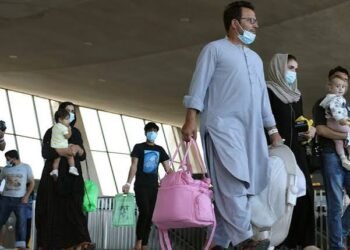



Australia faces an important demographic shift. Families have fewer children than in the past, and fertility has declined for decades. Migration has played a major role in population and workforce growth, but a further reality complicates the equation. Migrants living in Australia face the same pressures as other families: expensive housing, childcare costs, work demands and limited extended-family support. These can also influence their decisions about children.
For decades, migration has been a major driver of population growth. Young working-age arrivals have increased the population while contributing to employment and the economy. This becomes more important as Australia ages.
Migration alone, however, does not fully answer declining births. SBS News reported on migrant families who decided after arriving to have fewer children or delay parenthood. Their concerns resemble those of other Australians: high living costs, difficult home ownership, childcare expenses and, for many migrants, parents and relatives living overseas.
Australia has reached historically low fertility
Australian Bureau of Statistics data shows the total fertility rate reached 1.48 children per woman in 2024, the lowest recorded in Australia. In 2025 it increased slightly to around 1.50 children , still well below the level considered necessary for natural replacement between generations.
In the 1960s, Australia’s fertility rate exceeded three children per woman. It has now roughly halved. People still form families, but later, and many have fewer children.
This is not unique to Australia. Many developed countries face declining fertility and ageing. For a country relying substantially on migration for population growth, it raises a key question: can migration fill the gap if births decline?
Migrants make the population younger, but they also form families
Migration can moderate the impact of declining births. Many arrivals are young and of working age. They join the workforce, pay taxes and meet labour needs.
As the older population’s share grows, demand for healthcare, aged care and social support increases. Sufficient working-age people are also needed to sustain the economy and public services.
Migrants do not remain separate from Australian society forever. They live in the same housing market, pay the same childcare costs, face food and energy expenses, and try to balance work and family.
Migration can therefore change the population’s age structure without necessarily resolving declining fertility permanently.
Without nearby parents and extended family: a pressure migrants feel more acutely
An important part of the SBS report concerns the absence of family networks .
Where several generations live in the same city, grandparents can play a major childcare role: collecting children from school or care, helping on sick days or providing a few hours’ care so parents can work.
Many migrants lack this network in Australia. Their parents and siblings may live thousands of kilometres away, leaving almost all childcare responsibilities to the parents.
This creates time and emotional pressures as well as financial costs. A sick child may require a parent to take leave. Trusted care is not always available when parents need time for themselves.
For some families, this lack of support influences decisions about a second or third child.
Housing has become part of decisions about children
Housing costs are another factor. A family in a small apartment may need a larger home for another child, usually meaning higher rent or a larger mortgage.
In Sydney, Melbourne and Canberra, this can add hundreds of dollars to weekly or monthly costs. Families saving for a deposit may also delay having children.
The housing crisis therefore affects more than buying or renting. It can shape personal family decisions.
Couples may reconsider another child if it would mean leaving the city where they work, choosing a smaller home or accepting much greater financial pressure.
Childcare and returning to work also matter
After a birth, another question arises: who will care for the child?
Australia subsidises childcare, but it can still consume a substantial share of a family’s budget, particularly with several young children.
Parenthood decisions also connect to parents’ careers, especially women’s. A prolonged workforce absence reduces current income and may affect career progression, superannuation and future earnings.
For a migrant family still establishing financial stability in a new country, this calculation can be harder.
Can migration resolve population ageing?
Partly, but not alone.
Young working-age arrivals can sustain population growth and ease ageing-related pressures. Australia has benefited from this for years.
Migration is not a permanent solution to low fertility. Migrants age too, and may develop childbearing patterns similar to other residents. Where raising a family is expensive, migrant status does not itself lead to more children.
If policymakers want to make family formation more feasible, migrant numbers are only one consideration. Housing, childcare, secure work, parental leave and family support also matter.
It is about more than population numbers
Population debate sometimes becomes a simple choice between more or less migration. Reality is more complex.
Australia needs workers, and migrants contribute significantly to healthcare, aged care, construction and specialised professions. Rapid population growth can also increase demand for housing, transport, schools and public services.
Population policy must balance labour needs, preparation for ageing and conditions allowing both migrant and Australian-born families to decide about children without intolerable financial pressure.
Migration is part of the answer, not all of it
A single policy is unlikely to reverse declining births. Migration can strengthen population and workforce growth, but cannot alone remove the pressures leading families to have fewer children.
If family housing is expensive, childcare burdens budgets and parents cannot balance work and care, increasing migration does not alter those underlying causes.
Migrants’ experiences also show that moving to Australia does not necessarily mean having a larger family. They face the same economic realities as other families and may lack another important support: parents and extended family living nearby.
The population question should therefore go beyond “How many migrants should arrive?” A more important question is: Has Australia created an environment in which families can feel more confident about having children?
The answer may matter as much to the population’s future as migration policy itself.
Sources: SBS News and the Australian Bureau of Statistics.