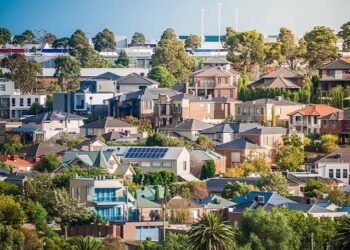


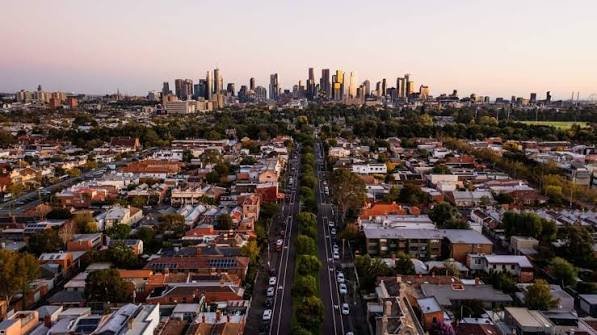
When Australia’s housing crisis is discussed, Sydney, Melbourne and million-dollar homes usually come to mind. But hundreds of kilometres from the major cities, another form of the crisis is growing. In some remote communities, the problem is not simply expensive housing: there are not enough homes at all. New homes are extremely costly to build. Families spend years on waiting lists. Several generations may live under one roof. Climate change and rising seas are now adding pressure to places already facing severe housing shortages.
A new SBS report from Seisia, a small coastal community in remote northern Queensland, illustrates the crisis. Located on Cape York Peninsula, it has around 300 residents. The private housing market is very limited, and many residents depend on government-supported housing. Limited supply, extremely high construction costs and overcrowding have put pressure on the area for years. Rising seas and coastal erosion now raise another question: if more families must leave vulnerable Torres Strait islands in future, where will they live?
More than 11 years waiting for a home
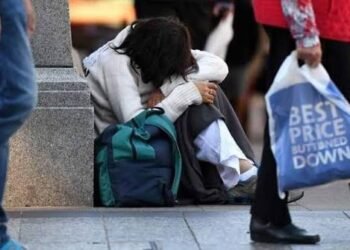
The story of Rebecca Williams shows the human dimensions of this crisis. She is 35, works full-time in environmental conservation and told SBS she had waited more than 11 years for a rental home. During that time, she lived in crowded relatives’ homes, spent a period working on a ship and moved between places. In recent months, she was living in a storage compound without electricity or a toilet, sleeping in a swag at night.
Williams said she had not been given a high housing priority because she had no children. She estimated that around 100 people in Seisia were waiting for long-term housing, a significant number in a community of roughly 300. Shortly before SBS published its report, Queensland’s housing department confirmed emergency accommodation would be provided, and she and her younger sister were expected to move into a two-bedroom government-supported home.
But finding housing for Williams does not resolve the wider problem. Dozens of others are still waiting. Some have been advised to move to Cairns for more opportunities. For Indigenous people in this region, however, relocating is more than changing address. Connections to land, family, culture and history are fundamental to their lives. Leaving can mean separation from Country and networks built over generations.
More than 200,000 households are on waiting lists across Australia
Long waits are not confined to Seisia. The latest Australian Institute of Health and Welfare data shows that, in June 2025, approximately 206,000 households were on integrated social housing waiting lists across Australia, up from around 183,000 a year earlier.
Around 190,000 households were waiting for public housing. Of those, 77,400 were classified as being in greatest need . The share of applicants in greatest need has also risen over a decade: from around 28 per cent of those on public housing waiting lists in 2014 to 41 per cent in 2025.
These figures highlight an important point. The issue is not simply a longer list. More of the people waiting are experiencing more severe housing needs.
Some families wait five years or more
Waiting times vary across Australia. Location, the type of home needed and the applicant’s priority level can affect how long it takes to receive housing.
AIHW data for 2024–25 shows that, among households eventually allocated public housing, 43 per cent had waited less than a year . Another 43 per cent had waited between one and five years, while 14 per cent had waited five years or more . Under the State Owned and Managed Indigenous Housing program, 15 per cent of households allocated housing had also waited at least five years.
These figures cover only people who were ultimately allocated a home. They do not mean the maximum wait is five years. Rebecca Williams’ experience of waiting more than 11 years shows that some cases can take much longer.
Social housing’s share has declined relative to the population
Australia has added social housing over the years, but growth has not kept pace with the number of households.
In 2011, around 404,000 households lived in the four main social housing programs. By 2025, this had risen to approximately 430,000. Over the same period, however, the total number of Australian households increased from about 8.4 million to 10.6 million. Consequently, social housing’s share fell from 4.8 per cent of all households in 2011 to around 4 per cent in 2025 .
This decline matters. When the private rental market becomes unaffordable for a family, social housing should form part of the community’s safety net. But if social housing does not keep pace with need, the pressure emerges as longer waiting lists.
Building one home in a remote area can cost around $1 million
Resolving Cape York’s crisis is not as simple as buying land and building a few homes.
Long distances, transporting materials, shortages of skilled workers and infrastructure requirements make construction extremely expensive. According to the Northern Peninsula Area Regional Council’s 2024–25 budget, building 15 new homes cost around $15 million , approximately $1 million per home.
This is one factor distinguishing remote housing problems from those in major cities. In Sydney or Melbourne, land and market prices may be the main issue. In a remote community, even where land is available, delivering materials, workers and essential services can make projects extremely costly.
For this reason, the private market cannot necessarily fill the gap. A commercially viable project in a major city may not attract private investment in a community of a few hundred people a thousand kilometres from a major economic centre.
Overcrowding: when homes cannot accommodate everyone adequately
A housing shortage has another consequence: overcrowding.
According to the Northern Peninsula Area Regional Council’s analysis of 2021 Census data, around 44 per cent of Aboriginal and Torres Strait Islander people in the Northern Peninsula Area did not have appropriately sized housing. The council estimated that at least 1,385 additional bedrooms were needed to reduce overcrowding, equivalent to around 462 three-bedroom homes.
Overcrowding is not merely a question of comfort. When many people share a small space, bathrooms, kitchens, sewerage systems and other facilities face greater pressure. The local council has also warned of measurable health and educational impacts and increased transmission risks for some infectious diseases.
Under these conditions, the housing crisis takes a different form. A person may statistically have a roof over their head, yet the home may be unsuitable for the number of occupants.
Climate change has now entered the equation
Cape York faces more than housing shortages. Its geography makes it vulnerable to sea-level rise, coastal erosion and flooding.
Low-lying areas of Cape York and the Torres Strait are vulnerable to climate change. According to information cited by SBS, a rise of just 50 centimetres in sea level could sharply increase the likelihood of some coastal flooding in Australia.
For Seisia, this is not merely a scientific projection about the future. The community’s own history is linked to environmentally driven displacement.
In 1947, exceptionally high tides and monsoonal rains flooded Saibai Island in the Torres Strait, damaging freshwater and food supplies. Several families left for Cape York. They were among the families who later helped establish communities such as Seisia and Bamaga.
Nearly eight decades later, their children and grandchildren fear history could repeat itself.
Will another generation be forced to relocate?
Evidence presented in the Australian Climate Case showed that very low-lying islands such as Saibai could face serious threats to habitability by mid-century if global warming continues on its current trajectory. Some parts of Saibai are only around 1.5 metres above sea level.
If more families must leave Torres Strait islands in future, Cape York would be a natural relocation destination. Family, cultural and historical links between these communities already exist.
But the problem is clear: the region already lacks enough homes for its current population.
This is where housing and climate change intersect. If housing planning focuses only on today’s needs, the region may be unprepared for possible future displacement.
The local council says hundreds more homes are needed
The Northern Peninsula Area Regional Council has called for greater federal investment to reduce chronic overcrowding.
Councillors and community leaders recently travelled to Canberra seeking funding for at least 120 new homes across the five Northern Peninsula Area communities, as well as repairs to existing homes. The council has also requested around $137 million to address overcrowding more broadly.
SBS reported that the council had also called for $1 billion from the Housing Australia Future Fund to support Queensland’s Indigenous communities. This is a request from the council , and should not be confused with approved government funding.
This distinction matters. The crisis is real and investment has been requested, but final funding decisions rest with government.
Australia’s housing crisis has many faces
For a Sydney family, the crisis may mean being unable to buy a home despite having two incomes.
For a Melbourne renter, it may mean rising rent and intense competition to secure a property.
For someone in Canberra, it may mean a long wait for public housing or difficulty finding an affordable rental.
In Seisia, however, it can mean something different: waiting more than a decade for housing, living without electricity or a toilet, several generations sharing an overcrowded home, and concern that rising seas will bring more people to a region already short of homes.
The phrase “Australia’s housing crisis” therefore does not describe a single problem. It takes different forms in different places.
Climate change could reshape the housing crisis
Climate change discussions usually focus on temperatures, bushfires, floods and sea levels. Housing is also an important part of the equation.
If an area becomes vulnerable to flooding or coastal erosion, the question is not simply how to protect existing homes. The next question is, if people must relocate, where will their new homes be built?
New housing must also account for future risks. A home built today without considering flooding, extreme heat or coastal erosion could become tomorrow’s problem.
In remote areas, this is more complex. Construction costs are already high, suitable land may be limited, and infrastructure must expand. For Indigenous communities, moving to another city is not always an acceptable alternative: a home is more than a building. It is connected to Country, culture, family and identity.
More than an affordability crisis
Rebecca Williams’ story makes an important point about Australia’s housing debate.
The housing crisis cannot be measured solely by median house prices or mortgage sizes. For part of the community, the issue is not buying a home. Even finding a suitable rental or accessing social housing can take more than a decade.
National data reinforces this picture. In 2025, more than 200,000 households were waiting for social housing, while social housing’s share of all Australian households has declined over recent years.
In remote areas, the issue becomes more complex. Construction costs rise, private markets are smaller, and overcrowding increases. In some places, climate change could also increase future demand for safe housing.
Australia’s response therefore cannot be the same everywhere. A policy suited to increasing apartment supply in Melbourne will not necessarily resolve the problems of a small Cape York community.
Australia needs more homes. The more important questions, however, are what kind of homes, where, at what cost and for whom?
For communities such as Seisia, another question must be added: Will the homes built today also be safe in tomorrow’s climate?
The housing crisis is no longer simply a story about prices in Sydney and Melbourne. In some parts of Australia, it simultaneously involves housing, poverty, infrastructure, culture and climate change . For a family that has waited more than ten years for a home, this policy debate has a simpler meaning: having somewhere safe to live.
Sources: SBS News and the Australian Institute of Health and Welfare (AIHW).