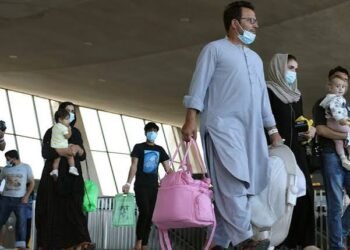

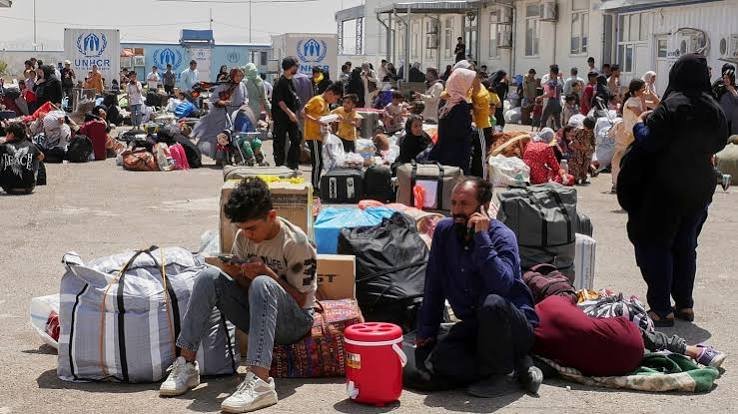
For many Afghan families, returning from Iran means more than crossing a border. After years in Iran, a family may arrive without a home, job or stable income. Some have been deported rather than returned voluntarily and have had little time to plan. UNHCR provides cash assistance and initial services for some returnees. However, not everyone returning from Iran automatically qualifies for cash assistance.
According to the latest UNHCR information, specific assistance rules have applied to Afghans returning or deported from Iran since 23 March 2026. Eligibility depends on their documents, circumstances of return and, in some cases, protection risks.
Afghan nationality or returning from Iran alone is not enough. People must meet the stated criteria and complete registration and assessment.
Who can receive cash assistance?
UNHCR identifies three main eligible groups.
The first is Afghan refugees returning voluntarily from Iran with a valid Voluntary Repatriation Form, or VRF . UNHCR issues this form to document voluntary return through its process.
The second is Afghan refugees holding a valid Amayesh card who return spontaneously or are deported from Iran. Under current UNHCR Afghanistan rules, deportation does not necessarily exclude valid Amayesh card holders from being assessed for assistance.
The third includes some holders of other documents and undocumented Afghans who return spontaneously or are deported. An important condition applies: they must face heightened protection risks and have eligibility established through assessment by UNHCR or its partner.
This should therefore not be treated as a universal payment for all Afghans returning from Iran.
How much is the cash assistance?
People found eligible who complete registration receive a one-off cash grant.
The current basic amount is 11,500 afghanis per family . Family size does not change this base amount: small and large families receive the same 11,500 afghanis.
Some vulnerable families can receive additional assistance. A household with a person with a disability or a female-headed household may receive an additional 2,300 afghanis , bringing the total for an eligible household to 13,800 afghanis.
The assistance addresses immediate needs after arrival. It should not be regarded as long-term household income support.
How is the money paid?
UNHCR says cash assistance is provided through a prepaid HesabPay card.
After registration, funds are transferred to the card, which is handed to the eligible person at the relevant centre. It functions like a debit card and can be used at ATMs, payment terminals and HesabPay agents in Afghanistan.
UNHCR recommends keeping the card and PIN secure. If future funding becomes available, the same card may be used for additional payments. This is not a guarantee of further assistance.
Beyond cash: what other services are available?
Eligible returnees and deportees may also access other services at the centres.
These include basic healthcare, vaccination, overnight accommodation when needed, protection counselling, mine-risk education, child-friendly spaces and malnutrition screening .
These services matter to families arriving after a difficult journey. Children may need healthcare, families may lack accommodation on the first night, and people affected by deportation, family separation or difficult travel experiences may need support and counselling.
Reception centres therefore do more than distribute money. They also identify immediate needs after arrival.
What happens if you enter through Islam Qala?
For many Afghans coming from Iran, Islam Qala in Herat province is a major entry point.
UNHCR says people in the eligible groups should approach its border-monitoring partner’s staff at the Islam Qala reception centre. Documents are checked and interviews conducted. Where needed, the person is referred to the Herat Encashment Center in Herat city.
At the Herat centre, UNHCR or partner staff check documents and conduct protection assessments where required. This helps determine eligibility.
According to current UNHCR information, Islam Qala reception operates daily from 8 am to 11 pm, and the Herat encashment centre daily from 8 am to 5 pm. Hours may change and should be checked before travel.
What if you enter through Zaranj?
People entering through Zaranj in Nimroz province also have access to a UNHCR reception centre.
Those meeting the criteria can attend for registration, document checks and assessment. Current UNHCR information lists daily hours from 8 am to 11 pm.
Outside working hours, only transit services and temporary accommodation may be available, subject to capacity, with assistance assessments deferred until the following day.
These details matter after a long journey. Arriving at a suitable time may avoid further waiting.
What if you have neither an Amayesh card nor a VRF?
This is important for many Afghans.
People without these documents should not immediately assume no support is available. Current UNHCR Afghanistan rules allow some returnees or deportees with other documents, and even undocumented people, to be assessed if they face serious protection risks.
They may hold an IOM Referral Form or a UNHCR Border Monitoring Referral Form . Without such a form, UNHCR or a partner may conduct a protection assessment in Herat or Zaranj.
Assessment does not guarantee assistance. The outcome depends on the individual’s circumstances.
Preserve your documents before crossing the border
UNHCR gives returnees an important practical recommendation. Some documents may be collected during exit procedures in Iran. Before travelling, keep clear photographs of your documents on your mobile phone.
Leave copies with trusted family members and, where possible, keep printed copies securely. These may be important when your history and status are checked in Afghanistan.
For people facing protection risks, identity documents and, where relevant, evidence of professional history may also matter in the assessment.
If someone is still in Iran, holds a valid Amayesh card and has genuinely decided to return voluntarily, UNHCR recommends contacting its Iran office before departure for information about voluntary repatriation and obtaining a VRF.
Biometric registration is required for cash assistance
Recipients of UNHCR cash assistance must complete registration.
UNHCR اعلام کرده است که معلومات اساسی فرد و خانواده ثبت میشود و اطلاعات بایومتریک، شامل fingerprints and iris scans. The stated purpose is to prevent duplicate claims or misuse of assistance.
Biometric registration is compulsory for cash assistance. UNHCR says it cannot make the payment if the person does not agree.
However, recipients do not have to surrender their Amayesh card or VRF to UNHCR. Documents are examined to verify authenticity.
What if you have already received assistance?
Return cash assistance is not a recurring payment.
Under current rules, people returning or deported from Iran who have already received this assistance are not eligible for another cash grant.
This matters because some may assume every entry from Iran creates a new entitlement. UNHCR rules do not support that assumption.
Women and girls can request a separate space
UNHCR explicitly states that women and girls have the right to request a separate space or private area when accessing services to improve their safety and protection.
This is particularly important for women travelling alone, female-headed households and people with protection concerns.
A woman who feels unsafe at a centre or needs to discuss personal matters privately can request services in a separate space.
Does UNHCR recommend returning to Afghanistan?
The availability of return assistance should not be interpreted as UNHCR declaring Afghanistan safe for forced returns.
On the contrary, UNHCR’s official information states that its advisory against forced returns of Afghans remains in place , with the position updated in September 2025. It has called on countries to stop forcibly returning Afghan nationals.
UNHCR also says an Afghan’s own decision to return must be voluntary and informed. Destination security, work prospects, essential services, family unity and potential risks should be considered beforehand.
This distinction matters. Assisting someone who has returned does not mean endorsing forced return.
Conditions after crossing into Afghanistan must also be considered
An 11,500-afghani grant can cover some immediate expenses but cannot resolve the long-term difficulties of return.
Families subsequently need housing, income, employment, children’s education and healthcare. Someone who lived in Iran for years may no longer have a home or strong support network in Afghanistan. Some children born or raised in Iran are entering Afghanistan for the first time.
UNHCR recommends obtaining current information on security, employment and service access at the destination before making a final decision.
Cash assistance should therefore be understood for what it is: limited support for immediate needs after return, not a guarantee of a livelihood in Afghanistan.
Where can you obtain reliable information after returning?
Do not rely on social media rumours or people charging money and promising UNHCR registration.
UNHCR stresses that all its services are free. No one should request money or another favour for registration, assessment or assistance. The organisation also warns about fake accounts and people impersonating UNHCR staff.
Assistance conditions may change with funding and operations. People in Iran or newly arrived in Afghanistan should check current conditions directly with official UNHCR sources.
For a family returning after years in Iran, 11,500 afghanis may not be much with which to restart life. However, knowing about the grant, healthcare, available support and assessment process can matter greatly in the first days.
Above all, assistance is not identical or automatic for everyone. Documents, circumstances of return and, in some cases, protection risks determine who qualifies.
Sources: The United Nations High Commissioner for Refugees (UNHCR) in Afghanistan and Iran.